אין תאריכים זמינים כרגע.
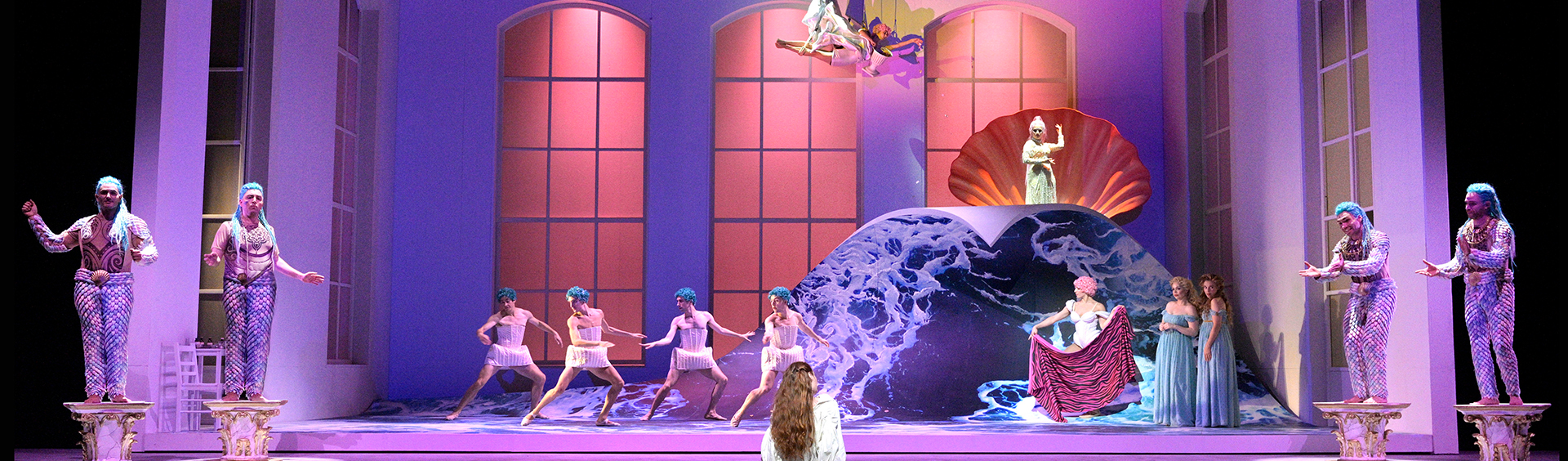
The curtain rises on the opera Ariadne a Naxos, based on a Greek legend. Ariadne, lying alone near a cave on the lonely island of Naxos, mourns her fate because Theseus, whose life she saved and with whom she spent happy days on the island, has abandoned her. She has suffered greatly and the three nymphs, Naiad, Dryad and Echo, share her grief. When she awakens from her disturbing dreams, she is faced with only one goal – to die. And so she awaits the arrival of Hermes, the messenger of death, to take her with him. But instead of Hermes, Cervina and four of her suitors/colleagues, Arlecchino, Scaramouche, Tropfeldino and Brigella, arrive on the island, trying to lift the depressed spirits of the lonely woman who seeks consolation in death. In a long aria, Cervina tries to explain to Ariadne that there is no point in seeking death or remaining faithful to one man. Life is an exciting and too short adventure and the name of the game is to swap lovers, which makes life even more enjoyable. Ariadne is not ready to accept these taunts, she retreats and leaves the stage to Cervina and her four wives for a comedy. The nymphs announce the arrival of the young god Bacchus, who has just defeated the witch-sorcerer Circe. The heroic god appears and Ariadne mistakenly thinks he is the messenger of death she has been longing for. The beauty of the sad mortal touches the god’s heart and he breathes new life into her through the miracle of love. Cervina is pleased with the result, which justifies what she explained earlier. Ariadne and Bacchus are left alone, singing the praises of love.
Co-production with the Krakow and Dortmund opera houses
Thank you to the Snow – Dithi family and Alex Landsberg for supporting this production.
prologue
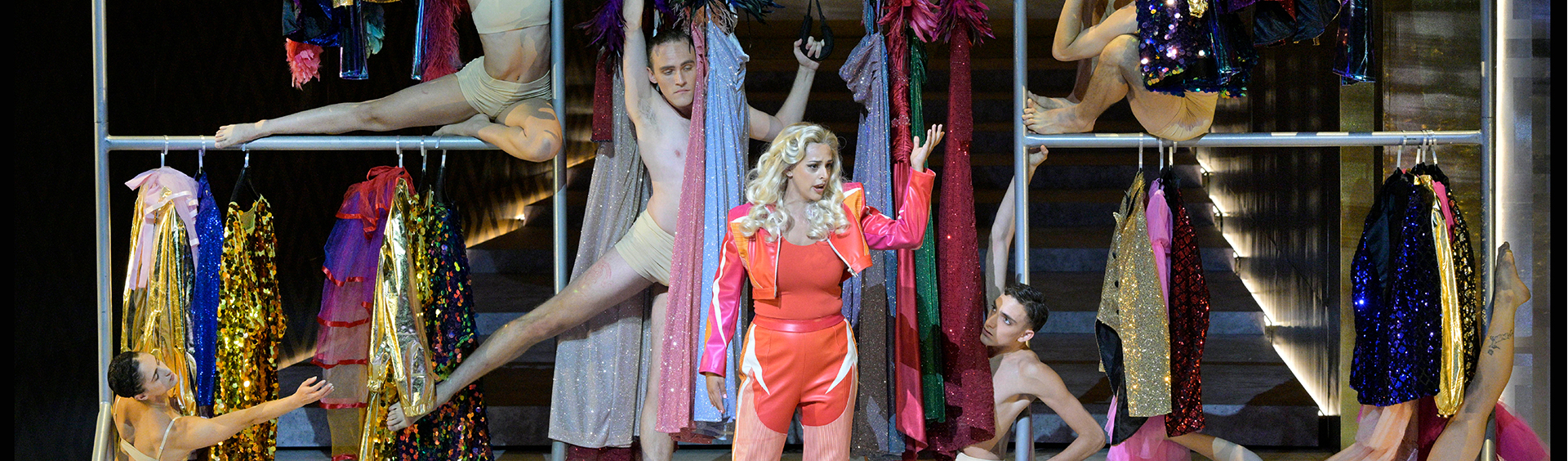
What could be more exciting than the premiere of a new opera of your own making? Well, the nameless, young and enthusiastic Viennese composer, the hero of the opera Ariadne auf Naxos, encountered quite a few setbacks on such an exciting day that ended, however, with a noble and moving discovery and recognition much more than artistic success. Our chivalrous young man had just finished writing the opera Ariadne auf Naxos, which was invited by a Viennese “nouveau riche” who was planning to organize a special artistic evening at his residence. Before the curtain rises on the opera, the young composer’s music teacher discovers to his astonishment that immediately after the performance of the opera “Seria” written by his student, the guests will be treated to an operetta, a comic buffo in the Italian style called The Frivolous Cervina and Her Four Lovers. While the music teacher expresses his opposition to this, the butler of the wealthy man who claims to be a patron of the arts passionately explains that only the master of the house, who after all paid for these works, has the right to decide what the order of events will be during the evening. The young composer arrives and is surprised to discover that the orchestra players are not ready for the final rehearsal 15 minutes before the curtain rises, because they are playing for the enjoyment of the guests who are dining to their hearts’ content. The tenor starring in the opera is very busy with the wig maker, and soon the soprano singer appears, who is not at all pleased to find Cervina in the house. The composer, on the other hand, has managed to notice the charming young actress and is slowly but surely conquered by her mere presence.
The music teacher tries to calm the confused composer while Cervina, the leading actress of the comedy troupe, mocks the serious and boring opera with the dance teacher and expects it to be a success that evening. But suddenly new instructions from the master of the house are given by his butler. In order to shorten what seems to be an overly long artistic program, and so that the fireworks planned for the evening’s end do not start too late, he has decided that the opera and the comedy will be performed at the same time. Chaos ensues. The composer believes that the end of the world has come and is about to cancel his opera and leave the venue, but the dance teacher saves the day. He suggests cutting the opera a little and incorporating the comic ballet into it as an interlude, especially given that Cervina is truly brilliant at improvising with her four colleagues. The music teacher reluctantly agrees and manages to convince the composer to agree, otherwise the opera will not be performed at all. After all, there is nothing wrong with a little improvisation in life. In the end, the composer gives in, not necessarily for logical reasons – if there can be any under the circumstances – but because of the sensual and captivating beauty of Cervina, who captivates him.
The opera
The curtain rises on the opera Ariadne a Naxos, based on a Greek legend. Ariadne, lying alone near a cave on the lonely island of Naxos, mourns her fate because Theseus, whose life she saved and with whom she spent happy days on the island, has abandoned her. She has suffered greatly and the three nymphs, Naiad, Dryad and Echo, share her grief. When she awakens from her disturbing dreams, she is faced with only one goal – to die. And so she awaits the arrival of Hermes, the messenger of death, to take her with him. But instead of Hermes, Cervina and four of her suitors/colleagues, Arlecchino, Scaramouche, Tropfeldino and Brigella, arrive on the island, trying to lift the depressed spirits of the lonely woman who seeks consolation in death. In a long aria, Cervina tries to explain to Ariadne that there is no point in seeking death or remaining faithful to one man. Life is an exciting and too short adventure and the name of the game is to swap lovers, which makes life even more enjoyable. Ariadne is not ready to accept these taunts, she retreats and leaves the stage to Cervina and her four wives for a comedy. The nymphs announce the arrival of the young god Bacchus, who has just defeated the witch-sorcerer Circe. The heroic god appears and Ariadne mistakenly thinks he is the messenger of death she has been longing for. The beauty of the sad mortal touches the god’s heart and he breathes new life into her through the miracle of love. Cervina is pleased with the result, which justifies what she explained earlier. Ariadne and Bacchus are left alone, singing the praises of love.
conductor
Dates: 19-28.5
conductor
On: 30.5
May
Decor design
Costume design
Lighting design
Video design
Video design
Traffic design
Ariadne
20.5, 23.5, 27.5, 30.5
Ariadne
19.5, 22.5, 24.5, 28.5
Bacchus
19.5, 22.5, 24.5, 28.5
Bacchus
20.5, 23.5, 27.5, 30.5
Cervina
20.5, 23.5, 27.5, 28.5, 30.5
Cervina
19.5, 22.5, 24.5
The composer
20.5, 23.5, 27.5, 30.5
The composer
19.5, 22.5, 24.5, 28.5
The music teacher
The dance teacher
Harlequin
Tropealdino
19.5, 20.5, 22.5, 23.5, 24.5
Tropealdino
27.5, 28.5, 30.5
Scaramuccio
In the back
servant
19.5, 20.5, 22.5, 23.5, 24.5
servant
27.5, 28.5, 30.5
Naiad
20.5, 22.5, 24.5, 28.5
Naiad
19.5, 23.5, 27.5, 30.5
Dryad
19.5, 20.5, 24.5, 28.5
Dryad
22.5, 23.5, 27.5, 30.5
Eco
19.5, 23.5, 27.5, 30.5
Eco
20.5, 22.5, 24.5, 28.5
Wig maker
20.5, 22.5, 24.5, 28.5, 30.5
Wig maker
19.5, 23.5, 27.5
Many servants


May 2025