Plot Summary
Part One – Jerusalem
“Thus says the Lord: Behold, I will give this city into the hand of the king of Babylon, and he shall burn it with fire.”
(Jeremiah 34:2)
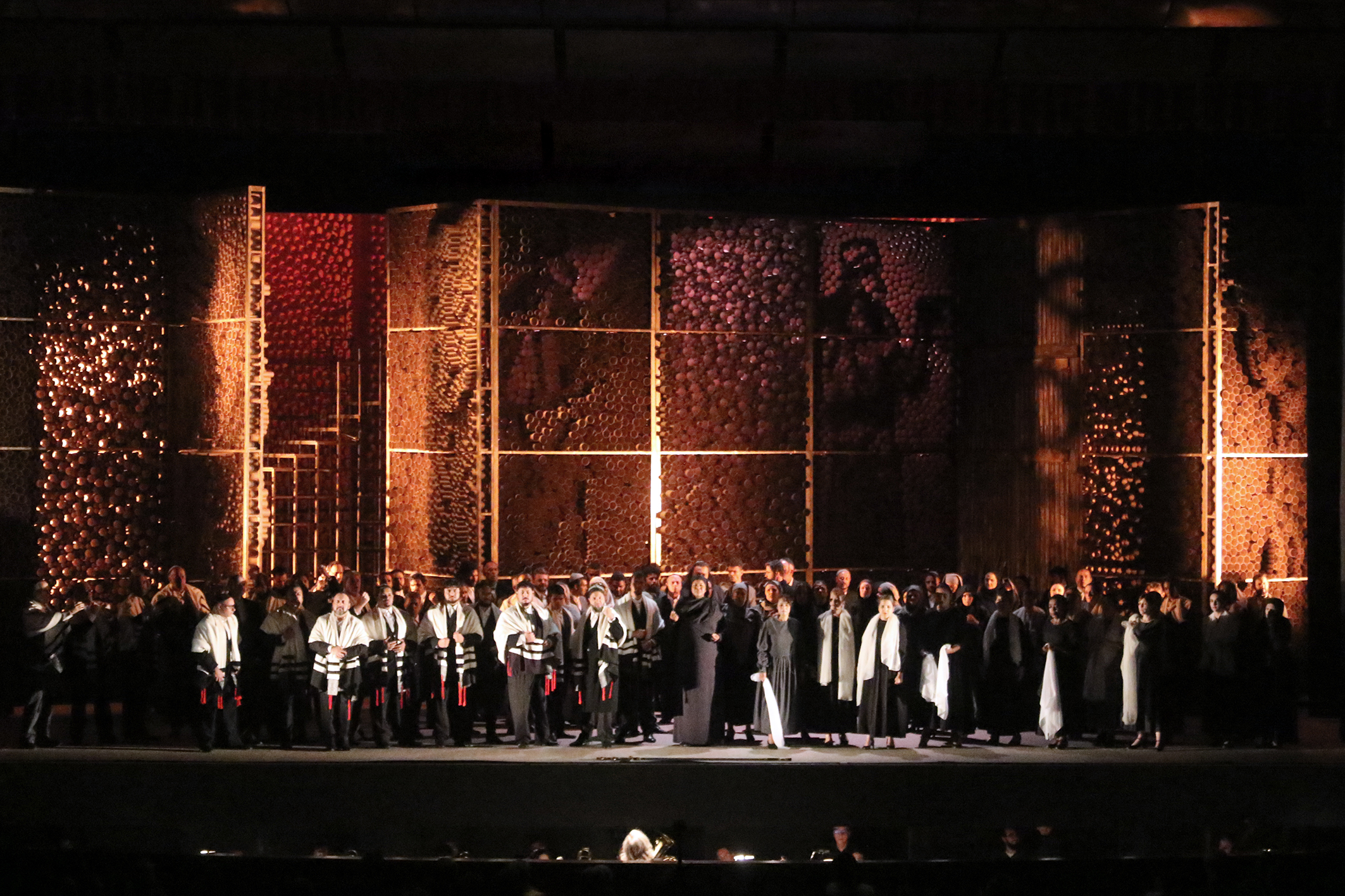
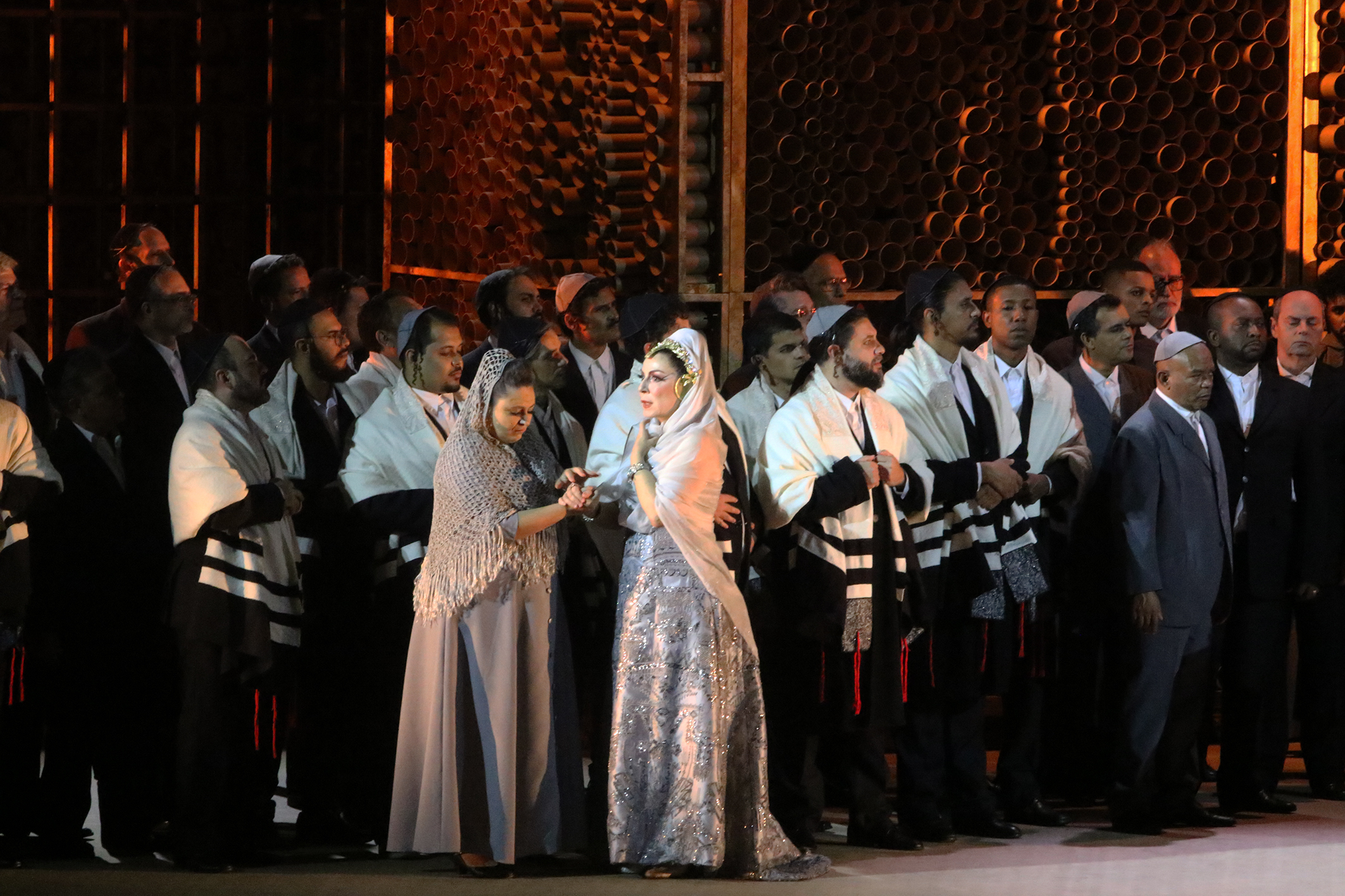
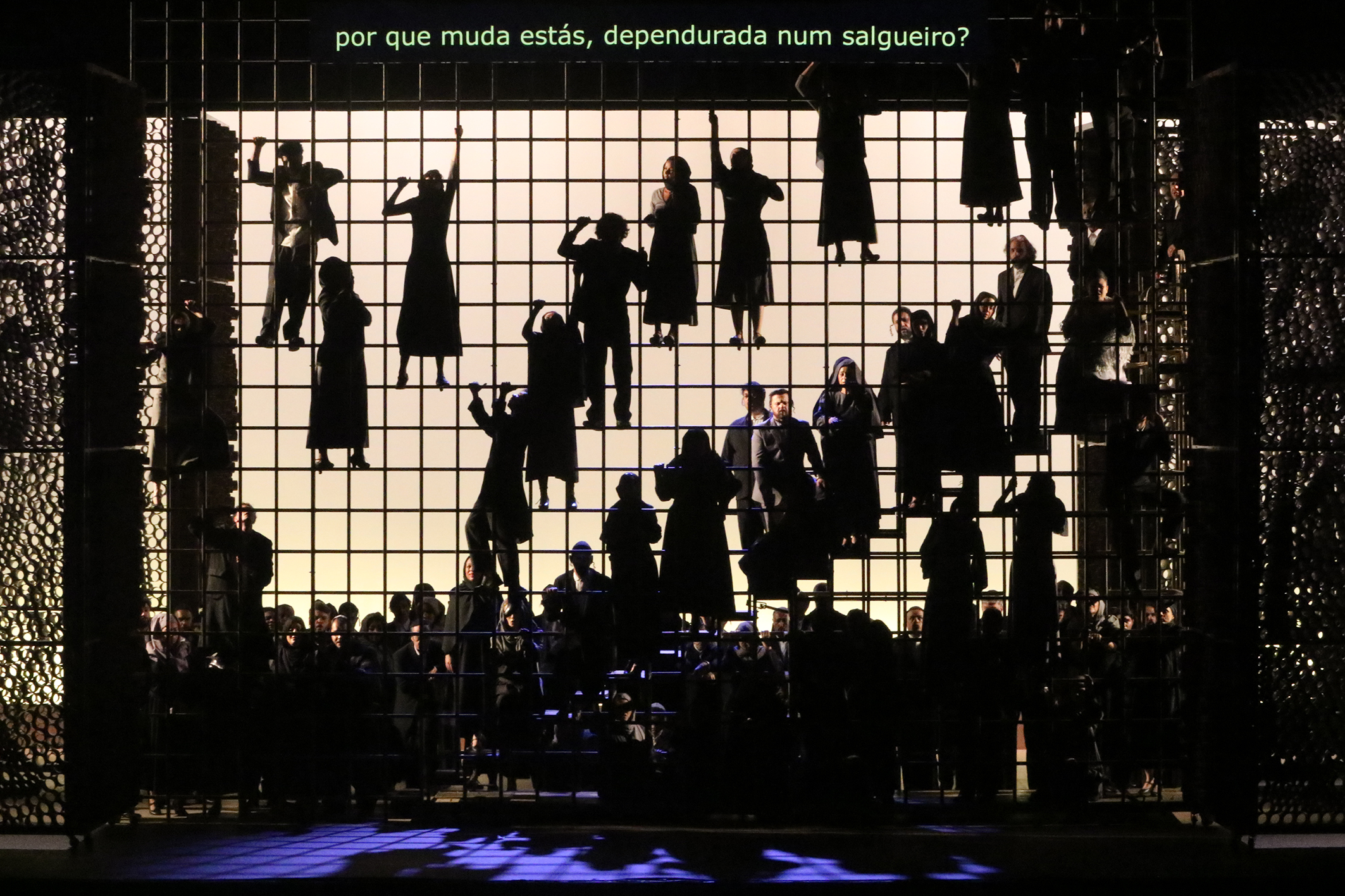
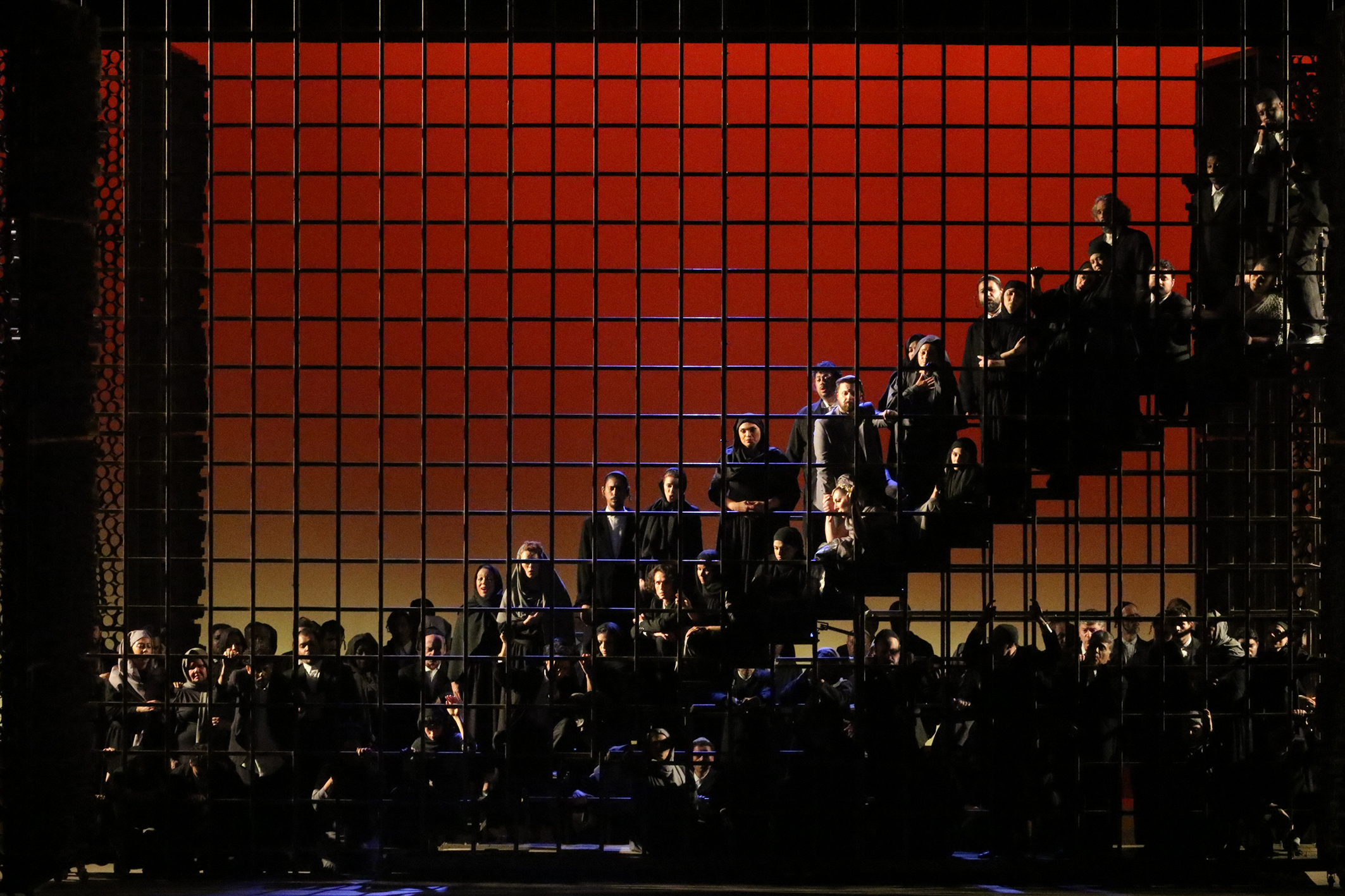
The courtyard of the Temple. The people of Israel lament their bitter fate and pray for help against Nabucco (Nebuchadnezzar), King of Babylon, who is attacking and devastating Jerusalem. The High Priest Zaccaria arrives, dragging with him Fenena, daughter of Nabucco, and proclaims that she is the hostage given to them by God to prevent Nabucco from destroying the city and the Temple. He entrusts Fenena to Ismaele, nephew of the King of Judah, Zedekiah. Zaccaria and the people go out to face the Babylonian invaders in a final stand, while Ismaele and Fenena remain alone. The two fell in love while Ismaele was imprisoned in Babylon, where Fenena helped him escape and secretly followed him to Jerusalem. Now that she is in danger, Ismaele tries to return the favor and save her. Suddenly, Abigail, Nabucco’s elder daughter, bursts in with Babylonian soldiers disguised as Hebrews. She offers to save Ismaele and his people if he agrees to love her, but he refuses.
The Israelites flee in panic back into the Temple, followed by Nabucco himself. Zaccaria warns Nabucco not to enter and defile the holy place, but Nabucco mocks both the priest and his God. Zaccaria threatens to kill Fenena with a dagger, but Ismaele intervenes, seizes the dagger, and saves her life. When Zaccaria and the other Hebrews curse Ismaele, Nabucco orders the Temple to be looted and destroyed.
Part Two – The Impious One
“Behold, the whirlwind of the Lord gos forth, it shall fall upon the head of the wicked.”
(Jeremiah 30:23)
Scene One
The palace of King Nabucco in Babylon. Nabucco appoints Fenena as regent in his absence while he continues his campaigns. Abigail discovers a document revealing that she is not Nabucco’s true daughter but the adopted daughter of slaves. Stunned by this revelation, she swears vengeance on Nabucco, Fenena, and the entire kingdom. The High Priest of Baal arrives with the news that Fenena wants to free the Israelites. Outraged by her betrayal, he offers the Babylonian crown to Abigail and spreads a rumor that Nabucco was killed in battle.
Scene two
Elsewhere in the palace, Zaccaria prays for divine inspiration to persuade the Babylonians to abandon their idols. Ismaele enters, and the Levites accuse him of treason. However, Zaccaria’s sister, Anna, pleads for forgiveness, revealing that Ismaele actually saved a daughter of Israel- Fenena, who has converted. A guard rushes in to warn Fenena of the danger, but before she can escape, Abigail storms in with the High Priest of Baal, the Babylonian priests, and soldiers. She demands the crown from Fenena and is about to
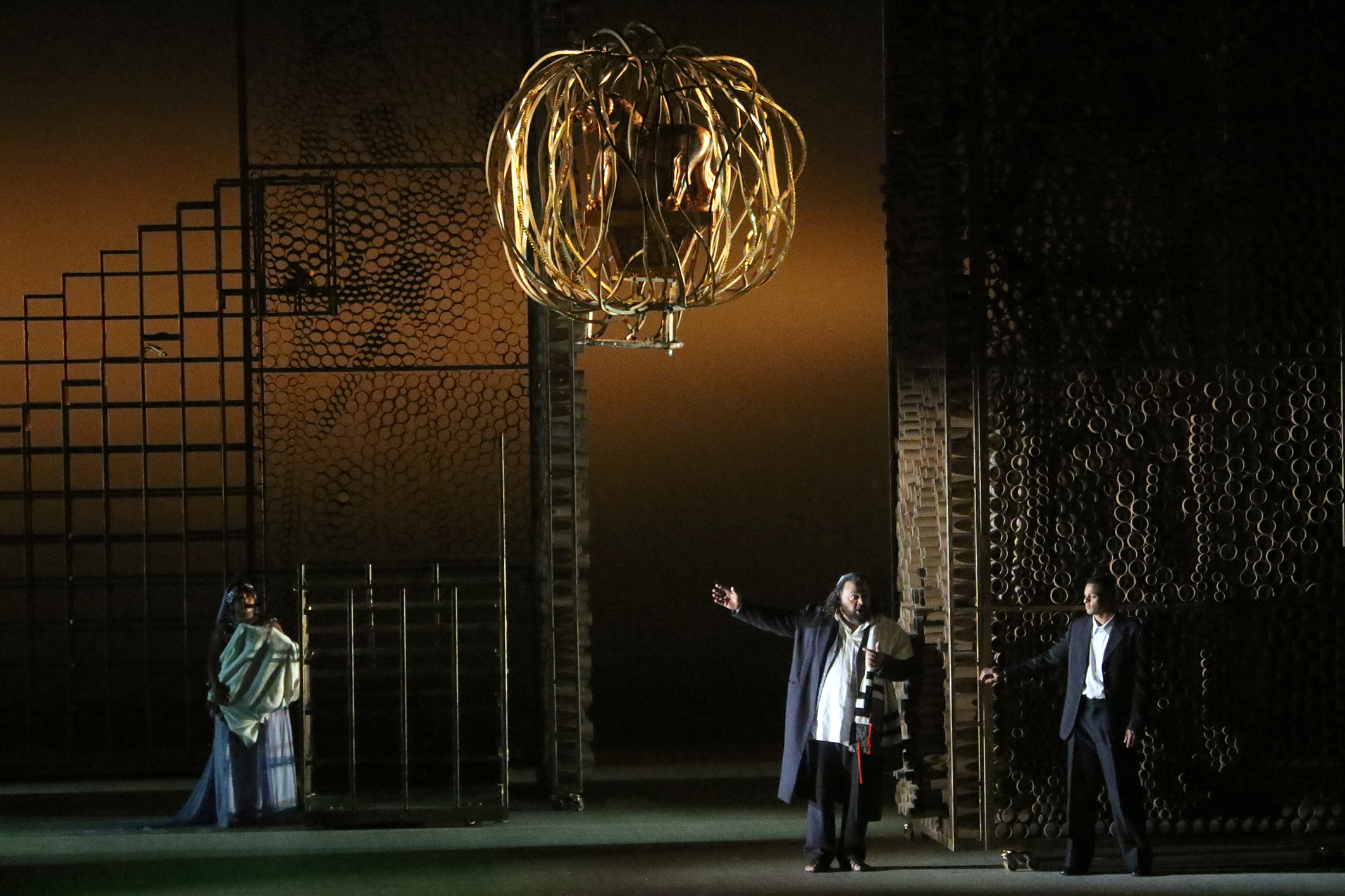
crown herself when, to everyone’s surprise, Nabucco appears. He snatches the crown from Abigail and, in a sudden fit of madness, declares himself not only king but also God. Zaccaria warns him of divine punishment, but in response, Nabucco orders the execution of the Jewish exiles. Fenena declares she will die with them. Enraged, Nabucco repeats his blasphemous claim, when suddenly lightning strikes and knocks the crown from his head. Abigail seizes the crown and proclaims herself Queen of Babylon.
Part Three – The Prophecy
“And Babylon shall become heaps, a dwelling place for dragons, an astonishment, and an hissing, without an inhabitant.”
(Jeremiah 51:37)
Scene One
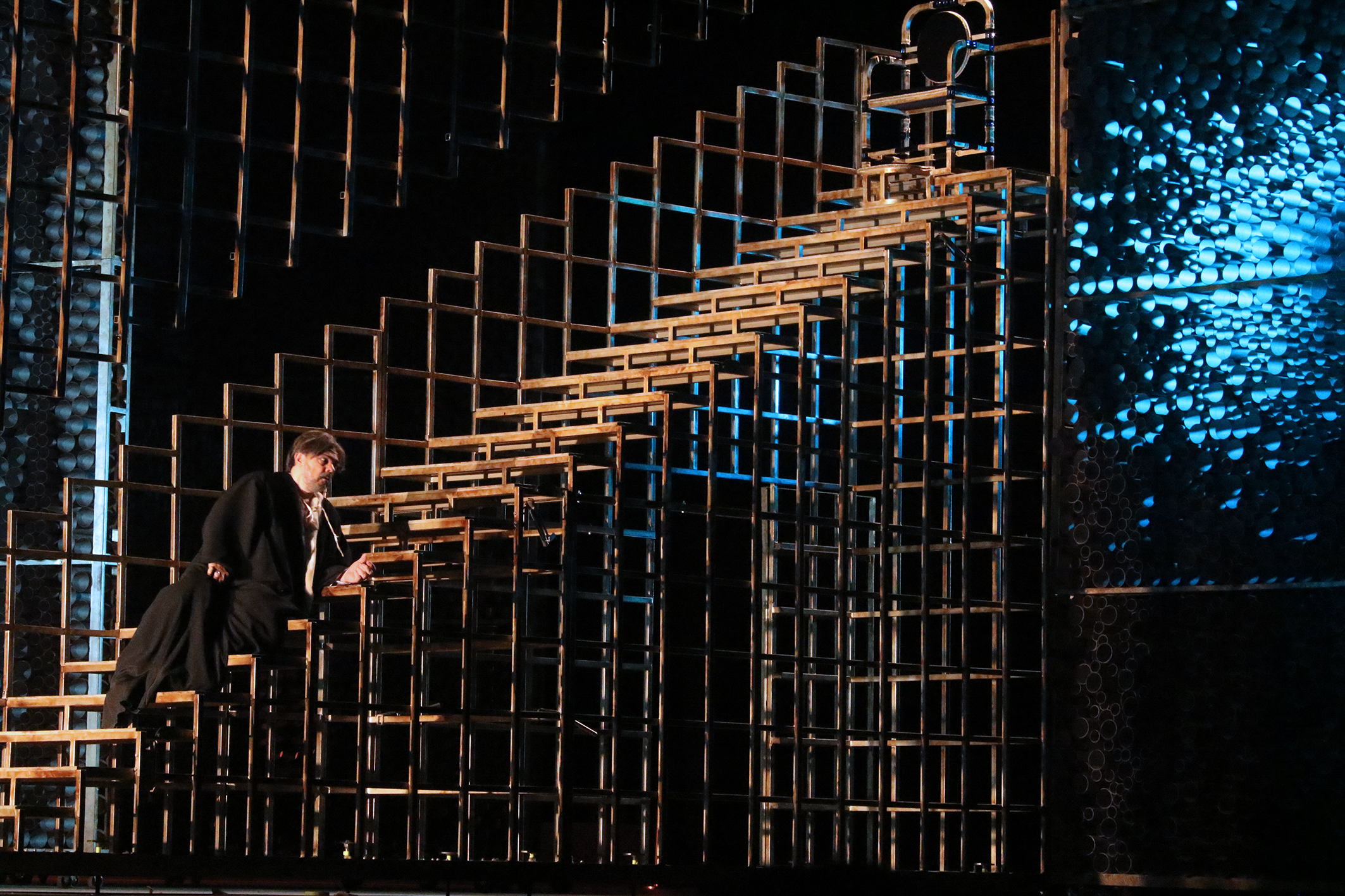
The Hanging Gardens of Babylon. Abigail sits on the Babylonian throne. The High Priest urges her to sign the death warrant for Fenena. Nabucco, now in rags and madness, enters. Abigail tells him she has safeguarded the throne during his illness. She tricks him into signing the execution order for the Jewish exiles, hiding the fact that Fenena will also be executed. When Nabucco asks after Fenena, Abigail reveals that he has just signed her death sentence. He reminds Abigail that she is merely an adopted slave. In rage, she tears up the only document proving her inferior origin. Nabucco pleads in vain for Fenena’s life. Now a prisoner of his adopted daughter, she holds absolute power.
Scene Two
By the banks of the Euphrates River. The Jewish exiles rest after forced labor, their hearts yearning for their homeland and its landscapes. Zaccaria prophesies the downfall of the Babylonian empire.
Part Four – The Shattered Idol
“Bel is confounded, Merodach is broken to pieces; her idols are confounded, her images are broken in pieces.”
(Jeremiah 50:2)
Scene One
Nabucco’s room in the palace. From his window, where he is imprisoned by Abigail, Nabucco watches Fenena and the Israelites being led to execution. In despair, he prays to the God of Israel, asking forgiveness and promising that, if granted mercy, he will himself return the exiles to Zion, rebuild the destroyed Temple, and believe in the God of the Hebrews. His prayer is answered: his sanity and strength are restored. His loyal officer Abdallo frees him and returns his imperial sword. Nabucco rushes out at the head of his army to save his daughter and the Jews and punish the rebels.
Scene Two
The palace courtyard. Fenena and the exiles are led to the altar of Baal for execution. Zaccaria tries to comfort Fenena, saying that in heaven she will be redeemed from her suffering. From outside, a shout is heard: “Long live Nabucco!”. Nabucco enters with his
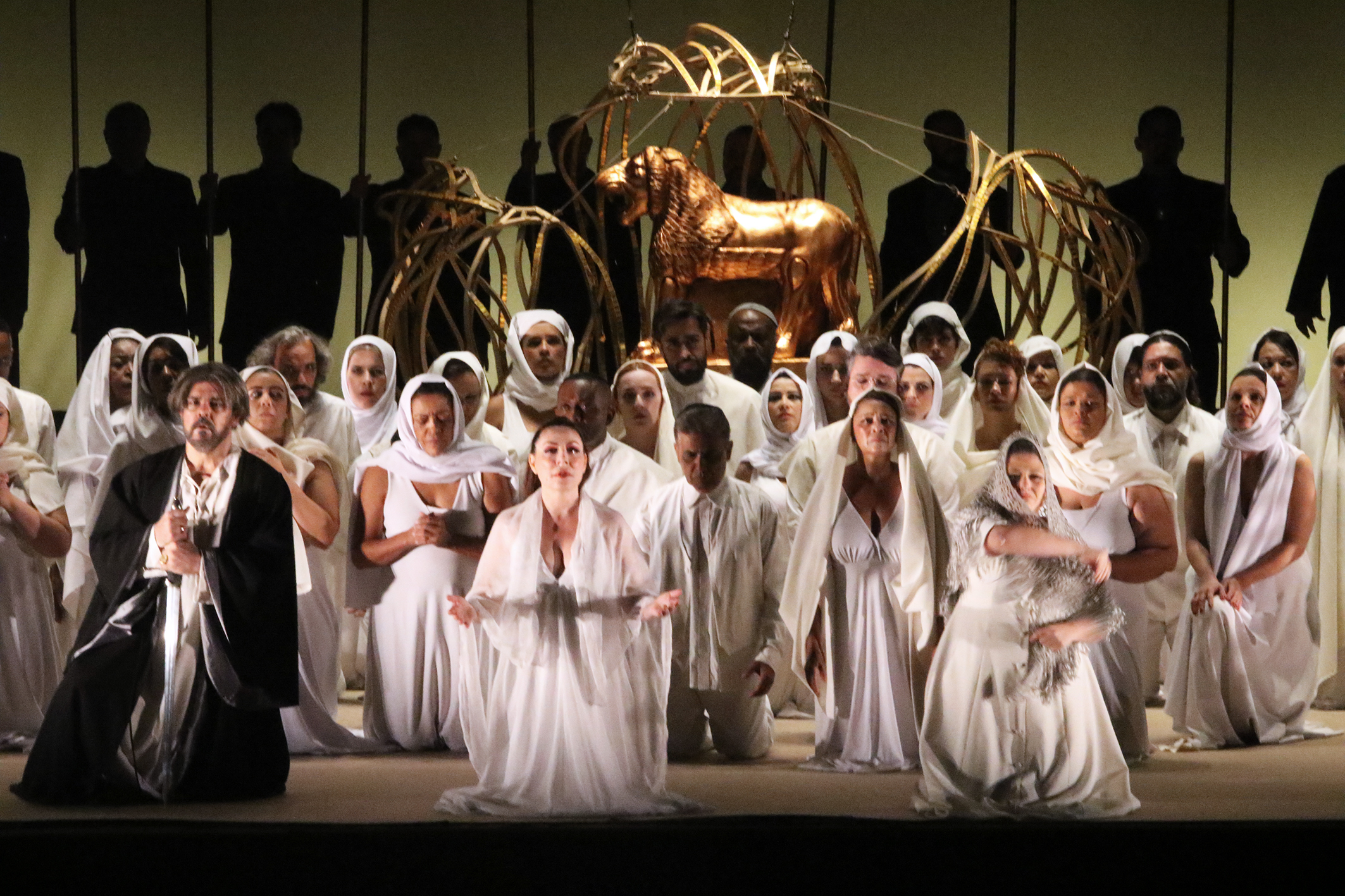
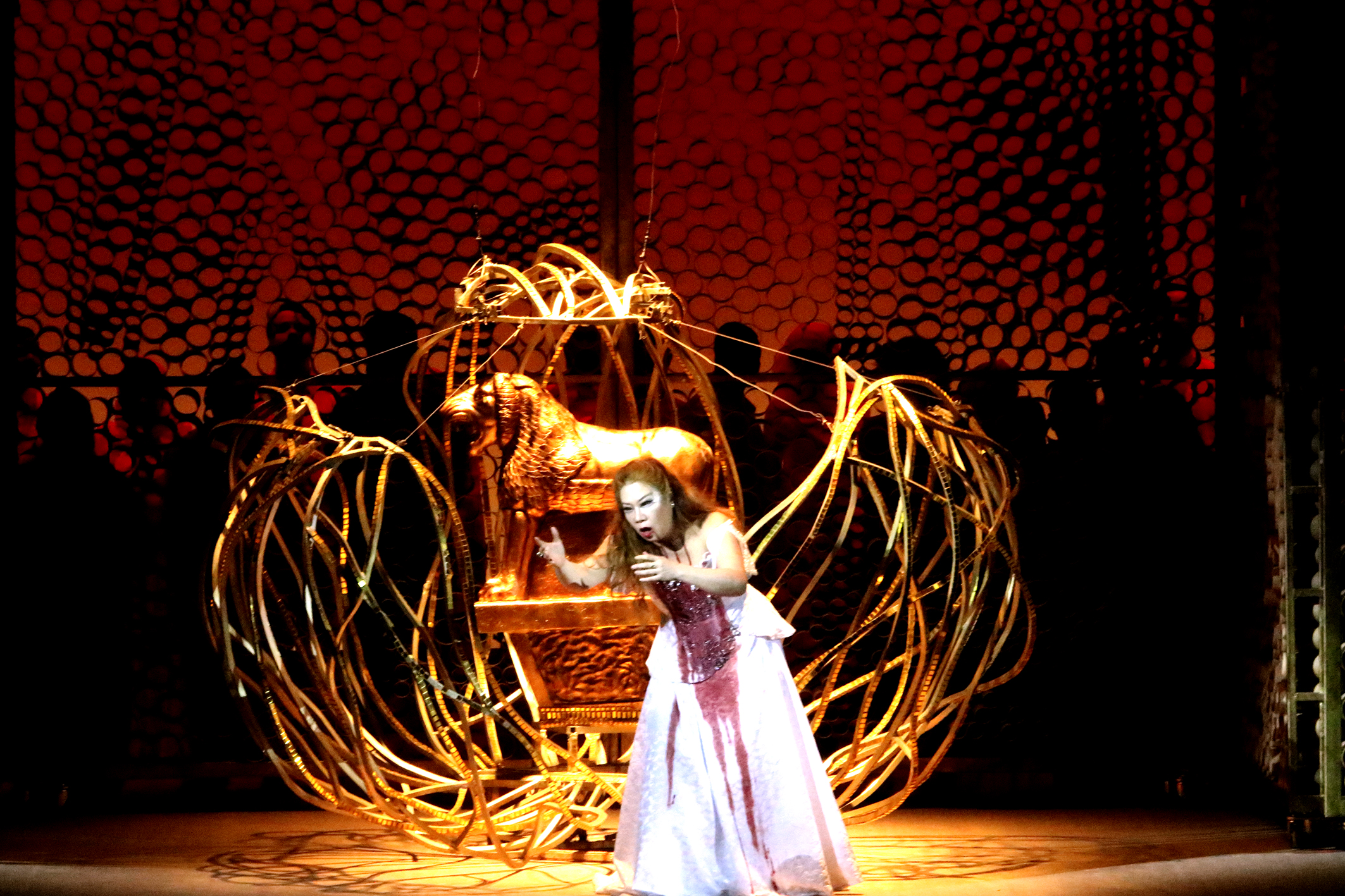
sword drawn and orders the destruction of Baal’s idol. Abigail, who has poisoned herself, begs forgiveness from her adoptive father, her sister, and the Jewish people before dying. Nabucco calls on the Jews to return to their homeland and rebuild the Temple, declaring that from now on he is a servant of the God of Israel. The people give thanks for the miracle and praise their God.